The Making of Mycelium Acoustic Panels: From Waste to Wonder
Discover the fascinating process of growing acoustic panels from mycelium and agricultural waste. Learn how nature's technology creates sustainable building materials in just a few days.

A Revolutionary Manufacturing Process
At Taftirium, we don't manufacture acoustic panels in the traditional sense—we grow them. This revolutionary process transforms agricultural waste into high-performance building materials through the power of mycelium, the root structure of mushrooms.
The result is a material that's simultaneously high-tech and completely natural, combining excellent acoustic performance with minimal environmental impact.
Step 1: Sourcing Agricultural Waste
Every mycelium panel begins with agricultural by-products that would otherwise be discarded or burned. We work with local farms to source materials like straw, hemp hurds, sawdust, and other plant-based waste.
This approach serves dual purposes: it diverts waste from landfills while creating value from materials that cost farmers money to dispose of. It's a perfect example of circular economy principles in action.
Step 2: Inoculation with Mycelium
Once the agricultural substrate is prepared and sterilized, we introduce mycelium—the vegetative part of fungi. Think of mycelium as nature's ultimate connector, a network of thread-like structures that can break down organic matter and bind it together.
The mycelium culture we use is specially selected for its binding properties, growth rate, and fire resistance. Within hours of inoculation, the mycelium begins colonizing the substrate, sending out threads in all directions.
Step 3: Growth in Custom Molds
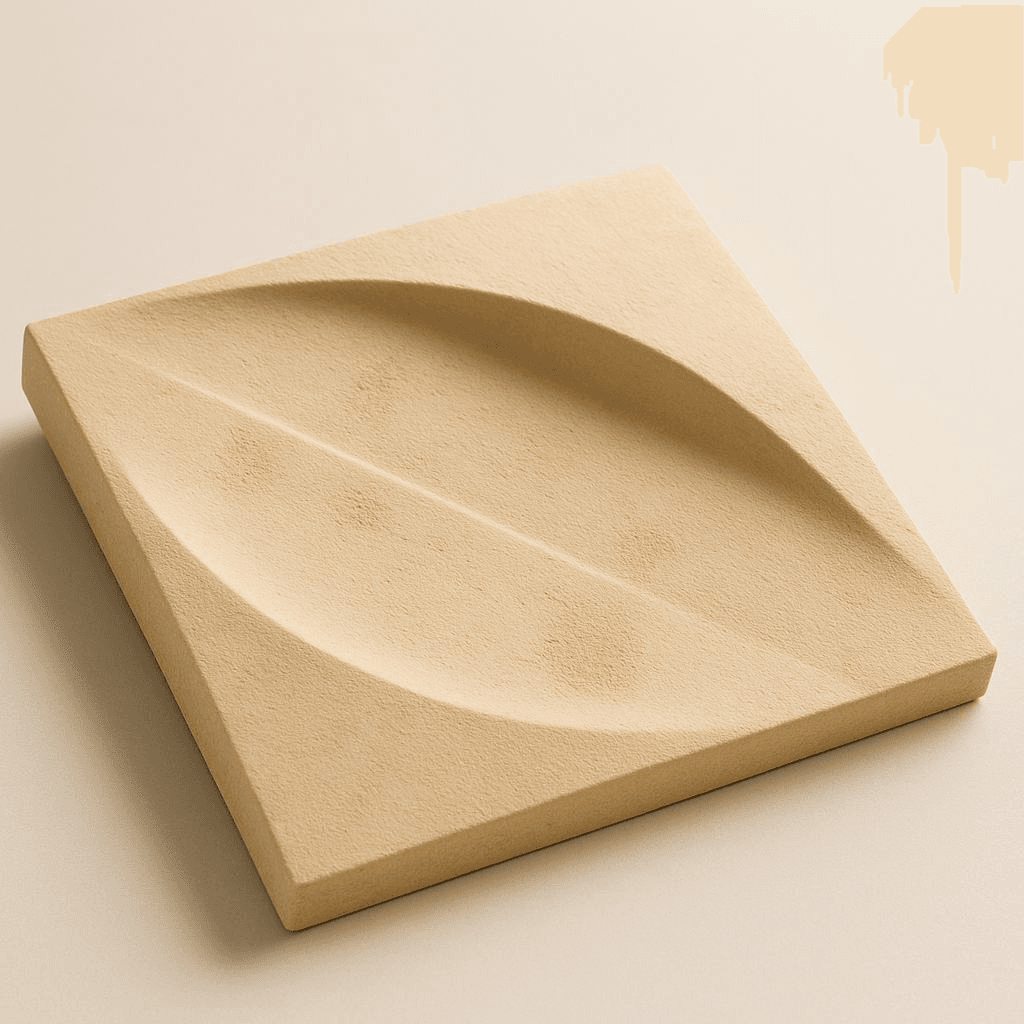
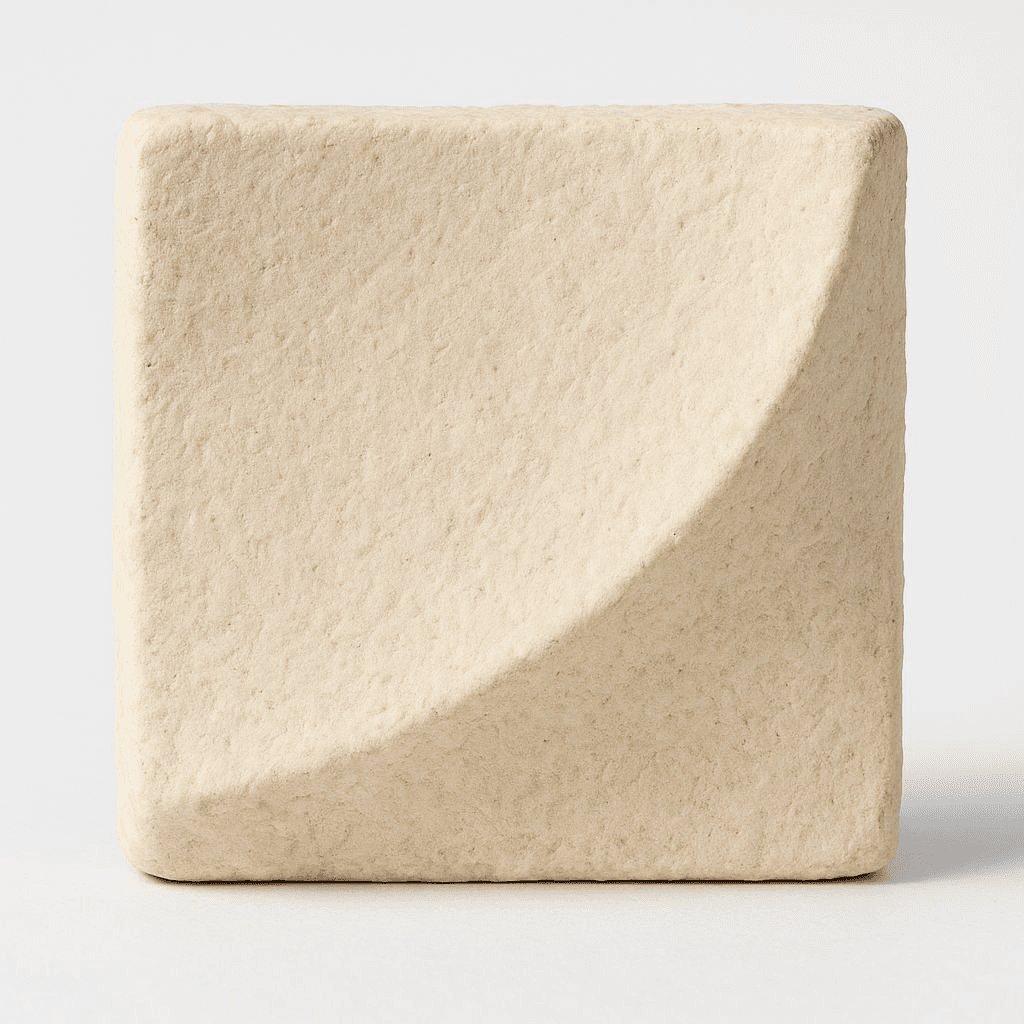
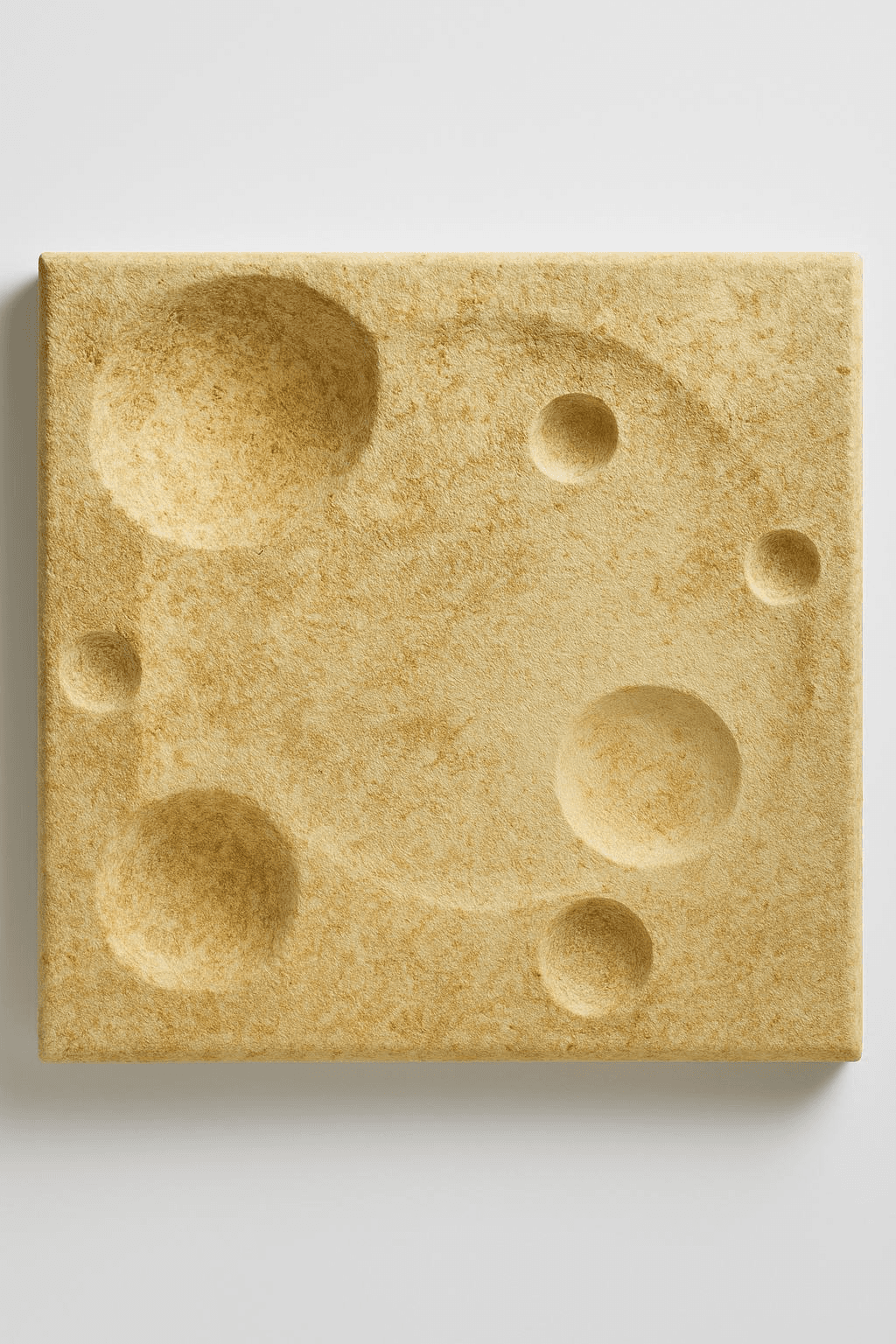
The inoculated substrate is placed in custom molds that define the final panel shape and texture. Unlike traditional manufacturing that forces materials into shape through heat and pressure, our process works with biology.
Over 5-7 days, the mycelium grows through the substrate, binding the particles together with millions of tiny threads. This creates a cohesive material that's both strong and lightweight, with the unique textures that make each panel one-of-a-kind.
Step 4: Heat Treatment and Stabilization
Once the mycelium has fully colonized the substrate, we halt the growth process through heat treatment. This serves multiple purposes: it stops further growth, reduces moisture content, and enhances fire resistance.
The heat treatment also "locks in" the acoustic properties of the panel. The mycelium network creates countless tiny air pockets throughout the material—perfect for absorbing sound waves.
The Science Behind the Acoustic Performance
Mycelium panels achieve their acoustic performance through their porous structure. Sound waves entering the panel travel through a maze of interconnected air pockets, where the sound energy is converted to heat through friction.
This natural structure performs comparably to synthetic acoustic foams, with NRC ratings between 0.50-0.70, while being completely natural and biodegradable. It's proof that nature's engineering can match or exceed human-made alternatives.
Quality Control and Testing
Every batch of panels undergoes rigorous testing. We measure acoustic performance, fire resistance (tested to Israeli Standard 1045), density, and moisture content. Only panels that meet our specifications are approved for sale.
This quality control ensures consistency while preserving the natural variations that make mycelium panels unique. No two panels are identical—each carries the signature of its growth process.
Environmental Impact
The environmental advantages of this process are substantial. Growing mycelium panels requires minimal energy—mostly for sterilization and heat treatment. There are no toxic chemicals, no high-pressure processes, and no synthetic binders.
At end of life, mycelium panels can be composted, returning their nutrients to the soil. Compare this to synthetic acoustic panels, which persist in landfills for centuries, and the environmental benefit becomes clear.
The Future of Material Science
Mycelium-based materials represent a paradigm shift in how we think about manufacturing. Instead of extracting, processing, and assembling, we can grow materials with precisely the properties we need, using waste as feedstock and biology as our factory.
This approach points toward a future where buildings are grown rather than built, where waste becomes resource, and where human design works in harmony with natural processes. The making of mycelium panels is just the beginning of this revolution.